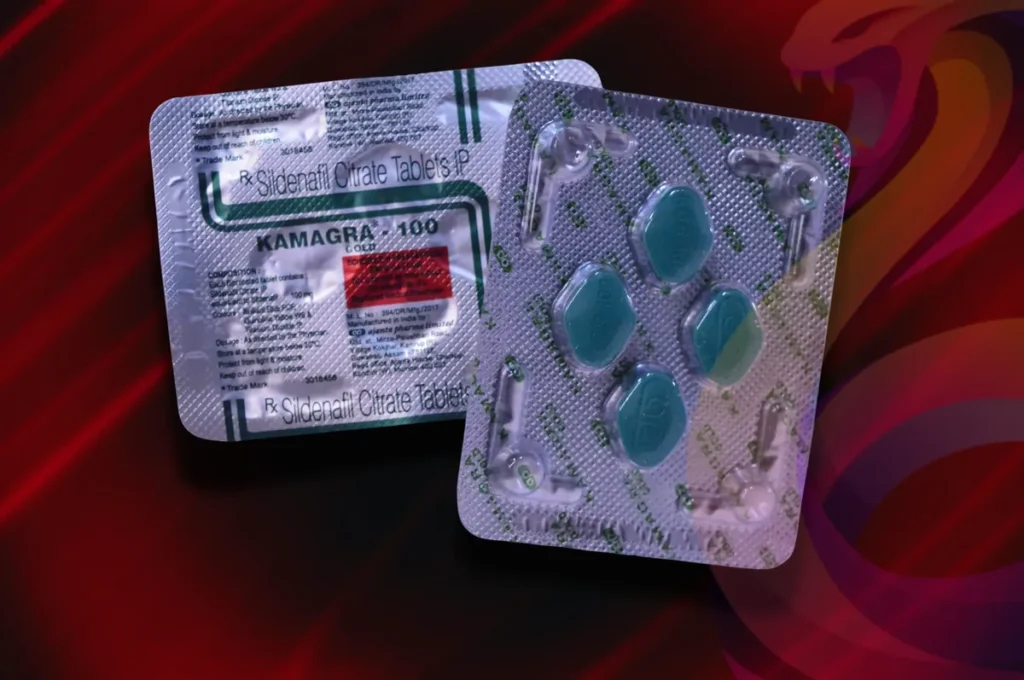
Products sold as “Kamagra for women” are labelled with the same active substance as the male version — sildenafil citrate, usually 100 mg. In short, the box looks different but the declared substance does not. The evidence on sildenafil in women is mixed: it has not been shown to raise desire (libido), and two landmark studies found benefit only in specific subgroups. The cited Viagra documents do not verify the composition or registration status of a specific Kamagra-labelled product in every country.
At first glance, the label sounds like a feminist answer to the blue pill. However, the reality is less revolutionary: the same active substance, a pink box, and more open questions. “Kamagra for women” is a marketing name for products declaring sildenafil, not a registered treatment. Let us take them apart without the sugar coating.
What “Kamagra for women” is and how it differs from the male version
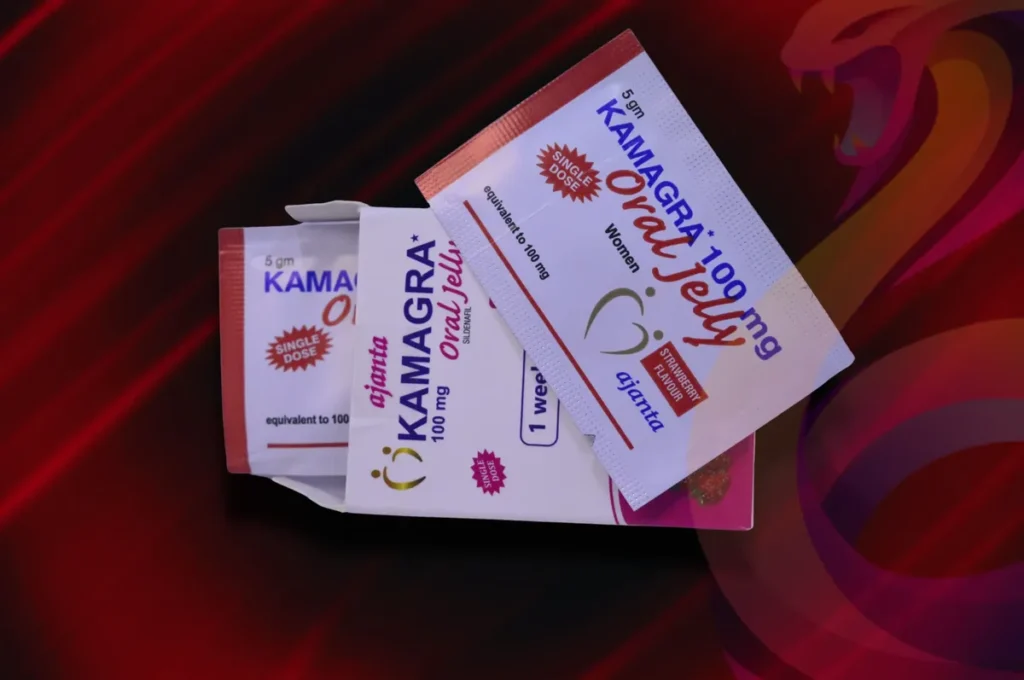
Under the name Kamagra for women — sometimes called “female Kamagra” — sellers offer products that declare the same active substance as the male Kamagra: sildenafil citrate, usually 100 mg. The difference is marketing rather than composition: pink colouring, packaging aimed at women, and occasionally an Oral Jelly form. According to labels and sales materials, the Indian company Ajanta Pharma makes them; on the market they also appear under names such as “Lovegra” or “Kamagra Woman”. For example, in gel form it appears as Kamagra Oral Jelly for women.
Still, the colour of a pill and the text on a box do not confirm what is inside. The cited sildenafil documents do not verify a Kamagra-labelled product or its registration status in every country. More on the whole Kamagra product family can be found in the Kamagra tablets guide.
How sildenafil acts in the female body
Sildenafil is a PDE5 inhibitor. It blocks the enzyme that breaks down the substance supporting blood flow, thereby increasing pelvic blood flow. In theory, therefore, it can improve genital sensitivity, blood flow and lubrication — which is why it was studied as a possible help for female sexual arousal disorder (FSAD).
Overall, research on sildenafil in women gives mixed results. A 2003 study by Berman and colleagues (The Journal of Urology) found significant improvement in postmenopausal women with FSAD without concurrent desire disorder; in women with concurrent hypoactive sexual desire disorder (HSDD), the benefit was not confirmed. A 2008 study by Nurnberg and colleagues (JAMA) showed that sildenafil may help women with sexual dysfunction induced by antidepressants (SSRIs). In 2024, reports appeared in the professional literature about a topical sildenafil cream at 3.6% concentration that showed improvement in some FSAD measures.
Critical fact: sildenafil does not increase libido — the desire for sex. It affects blood flow, not the chemical processes in the brain behind desire. This is the most common myth: a tablet will not fix long-term low desire that is tied to hormones, psychology, stress, relationships and overall health.
How sildenafil works in the body generally is explained in the complete sildenafil guide.
Kamagra for women: registration status in the EU
The cited sildenafil documents do not verify the composition or authorisation status of Kamagra-branded products in every country. Regulators repeatedly warn against the internet sale of unregistered erectile-dysfunction products, and they classify Kamagra among them.
The difference from registered sildenafil medicines (such as Viagra and its generic equivalents available in EU pharmacies) is fundamental: a registered medicine has a traceable registration number, a marketing authorisation holder, controlled composition and an approved SmPC/PIL. The cited Viagra documents do not verify a specific Kamagra product or its registration status in every country.
Why does this matter in practice? Without registration there is no quality control, the manufacturing conditions and origin are unknown, and falsification is a real risk. How to tell a falsified product from a registered medicine is covered in the article on fake erectile dysfunction drugs. You can check registration status in the databases of your national medicines authority and the European Medicines Agency medicines database.
Kamagra for women side effects and contraindications
Sildenafil has the same side-effect profile in women as in men. The following information is factual; for any concern, speak to a doctor or pharmacist.
Common side effects:
- headache
- facial redness, hot flushes
- nasal congestion
- visual disturbance (blurred vision, light sensitivity, colour discrimination problems)
- digestive upset, diarrhoea
- dizziness
Serious risks:
- a marked fall in blood pressure
- interaction with nitrates (heart medicines) — can be life-threatening
- priapism (a prolonged, painful erection) — though extremely rare in women
Sildenafil should not be taken by:
- people with cardiovascular disease
- people with low blood pressure
- people taking nitrates or nitric-oxide-based medicines
- pregnant and breastfeeding women
- people allergic to sildenafil
Urgent warning: if chest pain, a serious allergic reaction, or a sudden worsening of vision or hearing appears after use, seek medical help immediately.
Is there an officially approved “female Viagra”?
Registered medicines intended for women do exist — but they work completely differently from sildenafil, and the EU offers none of them.
- Addyi (flibanserin) — approved by the US FDA for premenopausal women with hypoactive sexual desire disorder (HSDD). It acts on chemical processes in the brain, not on blood flow. It has no EU marketing authorisation.
- Vyleesi (bremelanotide) — approved by the US FDA; an injectable acting on melanocortin receptors. It has no EU marketing authorisation.
The key difference is this: Addyi and Vyleesi went through clinical studies for a precisely defined indication, and controlled manufacturing covers every batch. The cited documents do not establish an approved indication for a specific Kamagra- or Lovegra-labelled product or verify its status in every country. EMA explains its role in the authorisation of medicines; national authorisation routes must also be checked.
What to check before any decision
- For health questions, talk to a gynaecologist or general practitioner — not a forum or a blog.
- Check the registration status of any medicine or product with the national medicines authority.
- The colour of a pill says nothing about its safety or efficacy.
- The difference between a registered medicine and an unregistered product is verifiable quality, composition and oversight.
- No tablet replaces communication with a partner or dealing with the health and psychological causes of low desire.
For general sexual health without sales shortcuts, see the article on morning erection. If you are comparing specific products sold under the “Kamagra for women” label — for example the Kamagra Oral Jelly Woman listing in our catalogue (For Women category) — check the composition, registration status and suitability for your body; availability of catalogue listings is limited while our compliance review continues. Comparison is only the first step; the decision belongs to you and your doctor.
Related reading
- Complete sildenafil guide — how sildenafil works, dosing frameworks and interactions.
- Women’s sexual health guide — desire, arousal, pain and when to seek help.
- Kamagra tablets guide — the whole Kamagra product family and its status.
- Fake erectile dysfunction drugs — how to tell a falsified product from a registered medicine.
Frequently asked questions
The labels declare sildenafil citrate and differ in marketing presentation. The cited Viagra documents do not verify the composition or registration status of a specific Kamagra product in every country.
No. Sildenafil affects blood flow, not desire. Libido is complex — hormones, psychology, stress, relationships and overall health all shape it. A tablet will not fix it.
The cited sildenafil documents do not verify a Kamagra product or its registration status in every country. Check the exact product with the relevant national medicines authority.
Headache, facial redness, nasal congestion, visual disturbance and digestive upset. If serious symptoms appear (chest pain, allergic reaction, loss of vision), seek medical help immediately.
In the US, Addyi (flibanserin) and Vyleesi (bremelanotide) are approved for low desire in women. Neither is available in the EU. They work differently from sildenafil.
A single accidental dose usually does not cause serious harm. Common side effects may appear (headache, redness, dizziness). For any unpleasant or persistent symptoms, contact a doctor.
Sources and methodology
Medical claims in this article are based on:
- Berman, J. R. et al. (2003). Safety and efficacy of sildenafil citrate for the treatment of female sexual arousal disorder: A double-blind, placebo controlled study. The Journal of Urology. PubMed
- Nurnberg, H. G. et al. (2008). Sildenafil treatment of women with antidepressant-associated sexual dysfunction: A randomized controlled trial. JAMA. PubMed
- EMA: Viagra product information
You can read more about our editorial process on the editorial policy page.
Author: Testovic Source check date: 10 August 2026 Content prepared by Testovic. We have not documented an independent doctor or pharmacist reviewer. The article is informational — it does not make a diagnosis, replace a medical examination, or recommend a specific treatment. For health concerns, contact a doctor or pharmacist.
Further informational articles can be found on the blog.